Acting for camera course
On-Camera Acting Programme
Duration: 3 months (12 weeks) · 8 hours per week: 2 lessons × 4 hours · Total: 96 hours
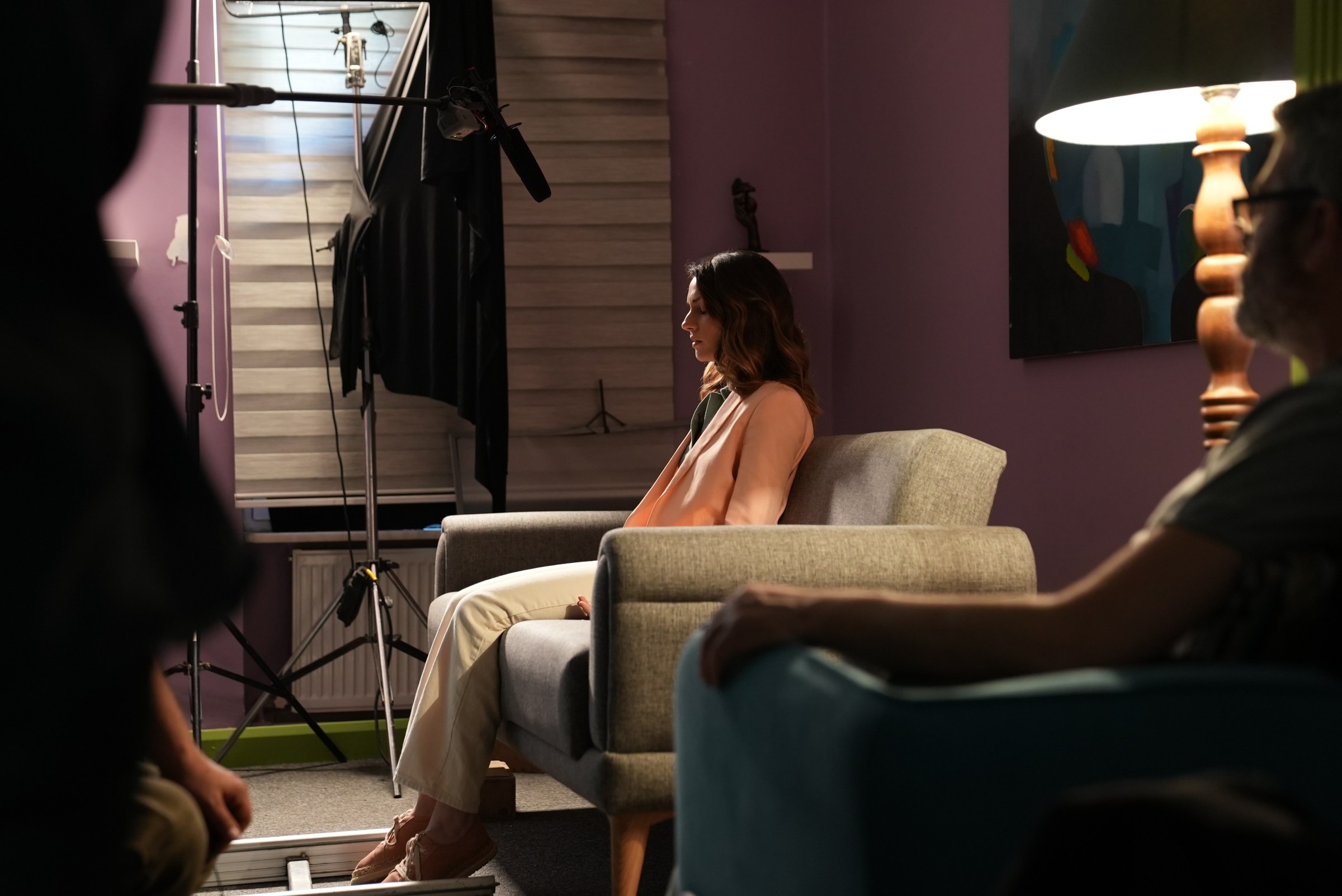
Method: Each lesson is recorded; the footage is then watched together on screen and assessed.
Month 1: Basics (Camera and Actor)
Week: Topic What is
covered 1 Getting to know the camera Differences between stage acting and acting for the camera; getting used to the camera and overcoming nervousness. Short introductory shots; watching oneself on screen.
2 Set knowledge and discipline Set terminology (action, record, clapperboard, ‘cut’), shot types (wide, medium, close-up, detail). Responding to cues, finding the light, relating to the lens.
3 Scaling Down and Realism Scaling down a performance that is large on stage for the camera; conveying thought through the eyes. Silent reaction exercises in close-up; ‘thinking without doing anything’.
4 Body, Voice, Diction Adjusting one’s voice for the microphone, natural speech, diction. Control of body language and facial expressions. Short narrative shots with and without dialogue.
Month
2: Technical and Stage Work
Week: Topic What is
covered 5 Script and character analysis Breaking the scene down into parts; the character’s objective, obstacle and subtext. Preparing a character profile.
6 Listening and reaction Genuine listening in front of the camera, connecting with a partner. Short two-person scenes, reaction shots.
7 Continuity and repetition: Repeating the same movement in the same order in every take. The same scene from different angles; acting in line with the edit.
8 Emotion and transitions: Generating authentic emotion, crying and anger scenes. Transitioning from one emotion to another within a scene. Analysis via footage review.
Month 3: Transition
to Professionalism
Week: Topic What is
covered 9 Casting and auditions Audition rehearsals and cold readings, liaising with casting agencies. Audition simulations.
10 Self-tape (self-filmed footage) Professional filming at home: lighting, sound, framing, reading partner. Preparing the video to be sent to the agency.
11 TV series, film and advert sets: TV series pace, advert acting, working with the product. Simulation of a real day on set.
12 Final project and showreel: 2–3-minute scenes are filmed and edited. Each student receives their showreel. Final screening and individual assessment.
What
students receive at the end of the programme
: Showreel: An edited video ready for submission to agencies.
Self-tape set: Audition videos recorded by the student themselves.
Photographs: On-camera portrait photographs (for the set card).
Class structure (every 4 hours)
: 30 mins: Warm-up (body, voice, breathing)
; 1 hour: Technical and subject matter instruction
; 2 hours: Practical
filming; 30 mins: Feedback